

Latest
Breaking News

Iran’s Leader Orders Broad Response if U.S. or Israel Attacks

Mojtaba Khamenei warned of an unrestricted response to new threats as Iranian and Qatari officials continued talks aimed at preventing renewed fighting.

Read the story
Breaking News · Read the story
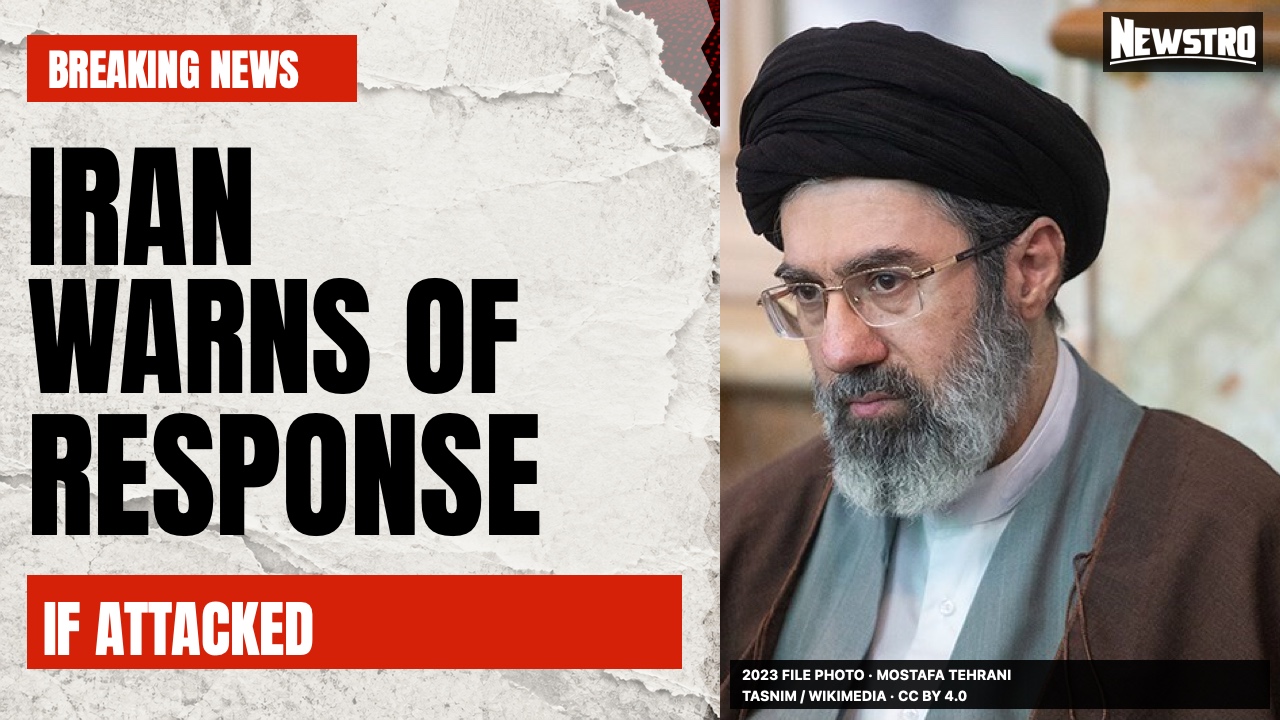
Breaking News thumbnail with a 2023 archive photograph of Iranian Supreme Leader Mojtaba Khamenei.
2023 file photo: Mostafa Tehrani / Tasnim via Wikimedia Commons · CC BY 4.0
Share this story

A warning as diplomacy continues

Iran’s supreme leader, Mojtaba Khamenei, has told military commanders to prepare an immediate response without geographic limits to new U.S. or Israeli threats, according to a statement from his office reported Saturday.

The warning comes as Iranian officials and Qatari mediators pursue talks intended to prevent renewed major fighting. U.S. Secretary of State Marco Rubio said President Donald Trump had not decided whether to launch new strikes and would prefer a diplomatic resolution, Reuters reported.

Khamenei’s statement is a warning about potential future action; it does not by itself establish that a new U.S. or Israeli strike has occurred. Neither side has announced a new comprehensive settlement.

Updated October 31, 2026, 5:02 p.m. Central. This is a developing story; diplomatic and security developments can change.
What Iran’s leader said

The statement described a meeting with senior military commanders and called for a response to threats that would be immediate and not geographically restricted, according to Axios and the Associated Press. It also called for a review of potential U.S. and Israeli targets, AP reported.

Axios described it as the first publicly disclosed meeting involving the supreme leader and all three top armed-forces commanders since the war began. The account comes from Iranian authorities; details of the meeting have not been independently established by Newstro.

The language signals Iran’s stated position if hostilities escalate. It does not identify a confirmed target, an attack date or the precise form any response would take.

Qatar’s mediators keep talking

Iranian negotiators met Qatari mediators in Doha on Saturday after more than 12 hours of discussions between Iranian and Qatari envoys in Tehran on Friday, Reuters reported, citing a person briefed on the talks. That source said the discussions were being coordinated through regular contact with Washington.

Iranian Foreign Minister Abbas Araghchi said Iranian diplomats were in Qatar for discussions and that Iran was not planning a direct meeting with U.S. officials at that point, AP reported. He described a proposal involving the Strait of Hormuz, but a public statement about a proposal is not confirmation that all sides have accepted a deal.

Rubio said direct and indirect contacts with Iran were continuing, according to Reuters. He did not provide a timetable for a settlement.

Why the warning matters

The U.S. and Israel launched strikes on Iran on February 28. Khamenei became supreme leader after those opening strikes killed his father, Ali Khamenei, AP reported. The conflict has carried consequences far beyond Iran’s borders, including disruption around the Strait of Hormuz, a key route for energy shipments.

Washington says it seeks to prevent Iran from obtaining a nuclear weapon; Tehran has maintained that its nuclear program is peaceful. The two sides also differ over the sequence and terms of possible steps toward a broader agreement, according to Reuters and AP.

Military preparations and warnings can coexist with negotiations. They do not establish that either a new strike or a diplomatic breakthrough is inevitable.

Where the diplomacy is unfolding

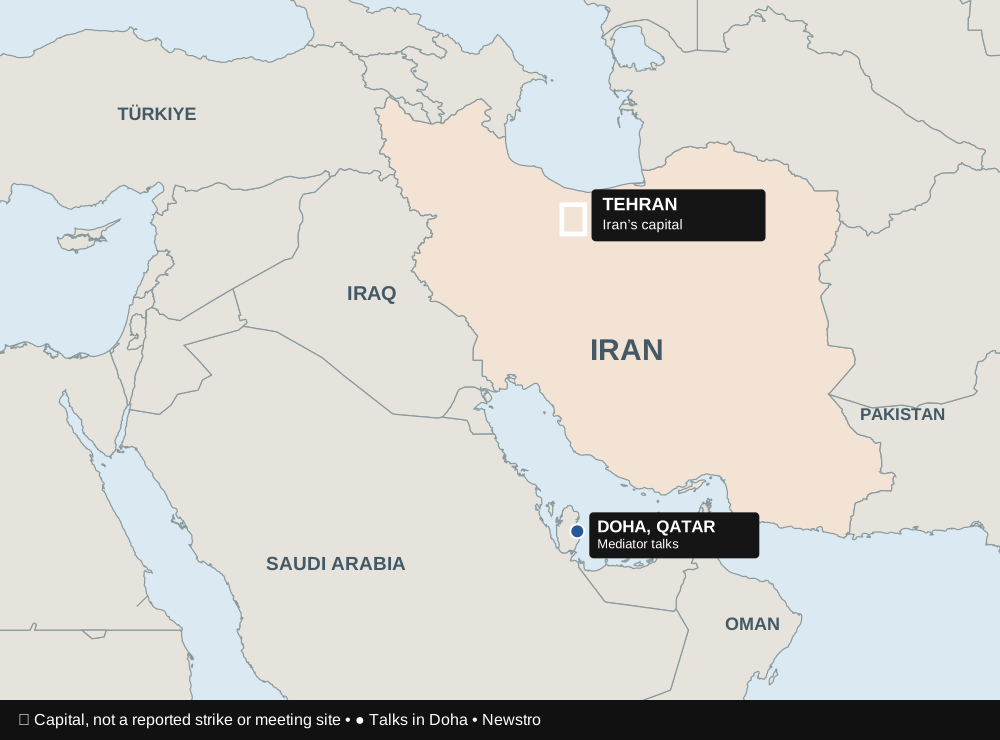
The star marks Tehran, Iran’s capital, for geographic context; it does not identify the location of the reported meeting or a new strike. The dot marks Doha, Qatar’s capital, where Reuters reported talks with Iranian negotiators.

Regional map showing Tehran, Iran’s capital, and Doha, Qatar, where talks with Iranian negotiators were reported. No strike location is shown.
★ Tehran, geographic context only · ● Doha, reported talks · Boundaries: Natural Earth, public domain · Reuters: talks · Newstro

Timeline

Dates follow the locations and reporting cited; exact meeting times have not been independently verified.

  1. U.S. and Israeli strikes begin the war with Iran; Iran’s previous supreme leader, Ali Khamenei, is killed. Source: AP
  2. Axios reports that U.S. Vice President JD Vance sent a letter to Iranian security chief Mohsen Rezaei concerning possible talks. Source: Axios
  3. Iranian and Qatari envoys hold extended discussions in Tehran, a person briefed on the talks tells Reuters. Source: Reuters
  4. Iran’s leader issues the warning as Iranian negotiators meet Qatari mediators in Doha; Rubio says Trump has not decided on new strikes. Source: Reuters

What remains unknown

It is not clear whether the diplomatic contacts will produce direct U.S.-Iran talks or an agreement, or whether Washington will decide on further military action. The public warning also leaves the scope and timing of any Iranian response unspecified.

Officials’ statements reflect their own positions and claims. The next material developments will be any verifiable decisions, formal agreements or actions—not the warnings alone.

Sources and visual credits

Axios: supreme leader’s statement · Reuters: Doha talks and U.S. response · Associated Press: regional developments.

Thumbnail: archive photograph of Mojtaba Khamenei by Mostafa Tehrani / Tasnim News Agency, via Wikimedia Commons, CC BY 4.0; cropped and composited. Wikimedia identifies the image as from 2023 and notes its republication in 2026; it does not depict the reported meeting. Hero: generated editorial background. Map: Natural Earth, public domain.