

Latest
Finance News

Developing Countries’ External Debt Hit $9.4 Trillion in 2025, World Bank Says

A new report finds borrowing costs remain high even as access to international finance improves.

Read the story
Finance News · Read the story
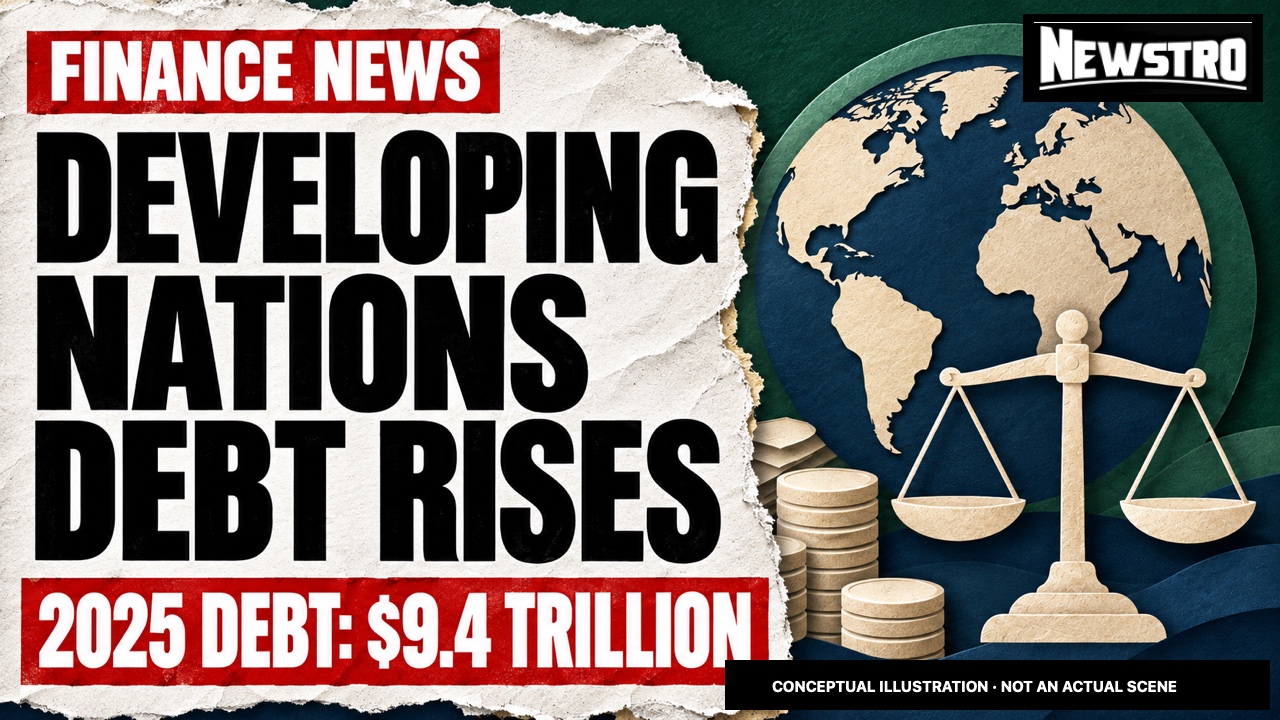
Conceptual paper-cut globe, documents and coins.
Conceptual editorial illustration · not an actual scene
Share this story

A record debt burden

November 6, 2026 · 6:50 a.m. Central / 7:50 a.m. Eastern

External debt across low- and middle-income countries rose 5.5% to a record $9.4 trillion in 2025, according to the World Bank’s newly released International Debt Report.

The bank said Thursday that more countries had regained access to private financing, but many were borrowing at high rates. Its figures describe debt at the end of 2025, not a live total for 2026.

Countries in the group paid $1.4 trillion in principal and interest during 2025, the bank said, up 1.9% from the previous year. That annual payment is different from the $9.4 trillion stock of debt outstanding.

Why access can still be costly

Countries eligible for the World Bank’s concessional International Development Association financing paid an average 8.2% on new private-creditor commitments in 2025, the highest since 1989, the bank said. The figure is an average for new commitments, not the rate on every outstanding loan.

Public entities issued about $251 billion in bonds, nearly 35% more than a year earlier. Some governments sold new bonds to buy back maturing debt, extending repayment schedules without substantially reducing what they owed, according to the bank.

Bloomberg reported that access to credit has improved for some borrowers while affordability remains a challenge. The risks and repayment capacity differ widely by country.

What the numbers do and do not show

External debt means obligations to lenders outside a country; it is not a measure of all domestic and foreign borrowing combined. The report’s aggregate covers both low- and middle-income countries, so it should not be described as debt owed solely by the poorest countries.

Exchange rates also affected the dollar figures. The bank said more than a quarter of a $303 billion increase in public and publicly guaranteed debt reflected a weaker dollar raising the reported dollar value of obligations in other currencies.

Between 2022 and 2025, developing countries paid $436 billion more in debt service than they received in new financing, the bank said. In 2025 alone, however, long-term debt flows turned to a $45 billion net inflow after a $118 billion outflow in 2024.

Why it matters

The bank warns that debt payments can leave governments with less room to fund health care, education and infrastructure. Borrowing can also finance useful investment, so the effect depends on loan terms and how funds are used.

Its analysis calls for clearer debt records and more affordable financing. The World Bank is itself a lender to many of the countries covered; its assessment should be read with that role in mind.

The report’s timeline

Report dates are Eastern time.

  1. Long-term debt flows recorded a net outflow of $118 billion, according to the bank.
  2. External debt reached $9.4 trillion; long-term flows turned to a $45 billion net inflow.
  3. The World Bank published the report’s findings.

Reporting on the findings

Economy Middle East summarized the report on X. Its post refers to the same World Bank figures and is not an independent data source.

Open the original post if the embed does not load.

Sources and visual credits

World Bank report findings · World Bank analysis · Bloomberg via The Edge · Economy Middle East on X.

Hero and thumbnail: conceptual illustration, not a photograph or a chart of actual values.