
Latest
Finance News

Bank of England Raises Interest Rate to 4% as Inflation Pressures Mount

The first increase in more than three years comes as the bank watches energy costs and warns that inflation could rise further.

Read the story
Finance News · Read the story
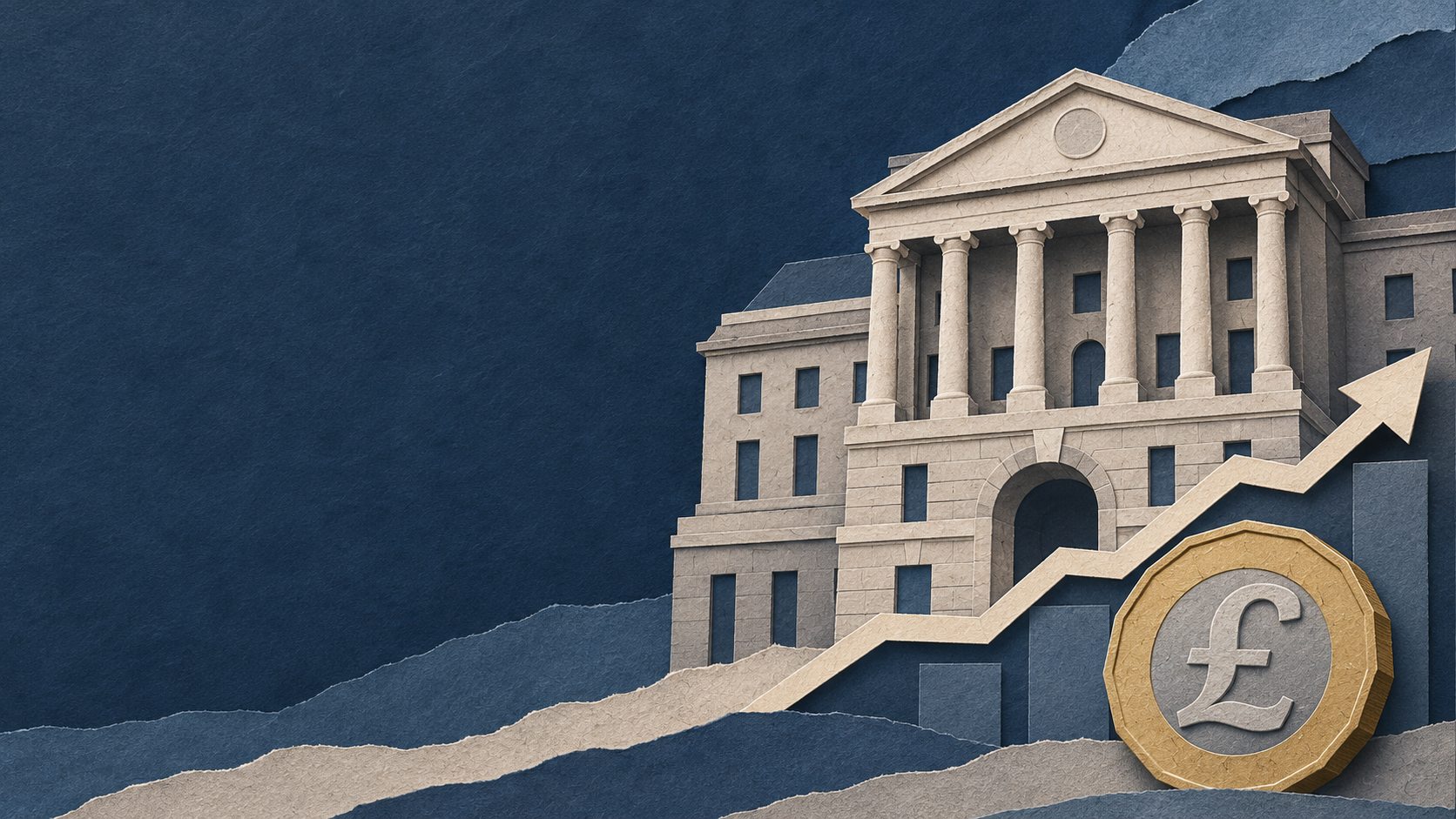
Conceptual paper-cut illustration of a bank, pound coin and rising arrow.
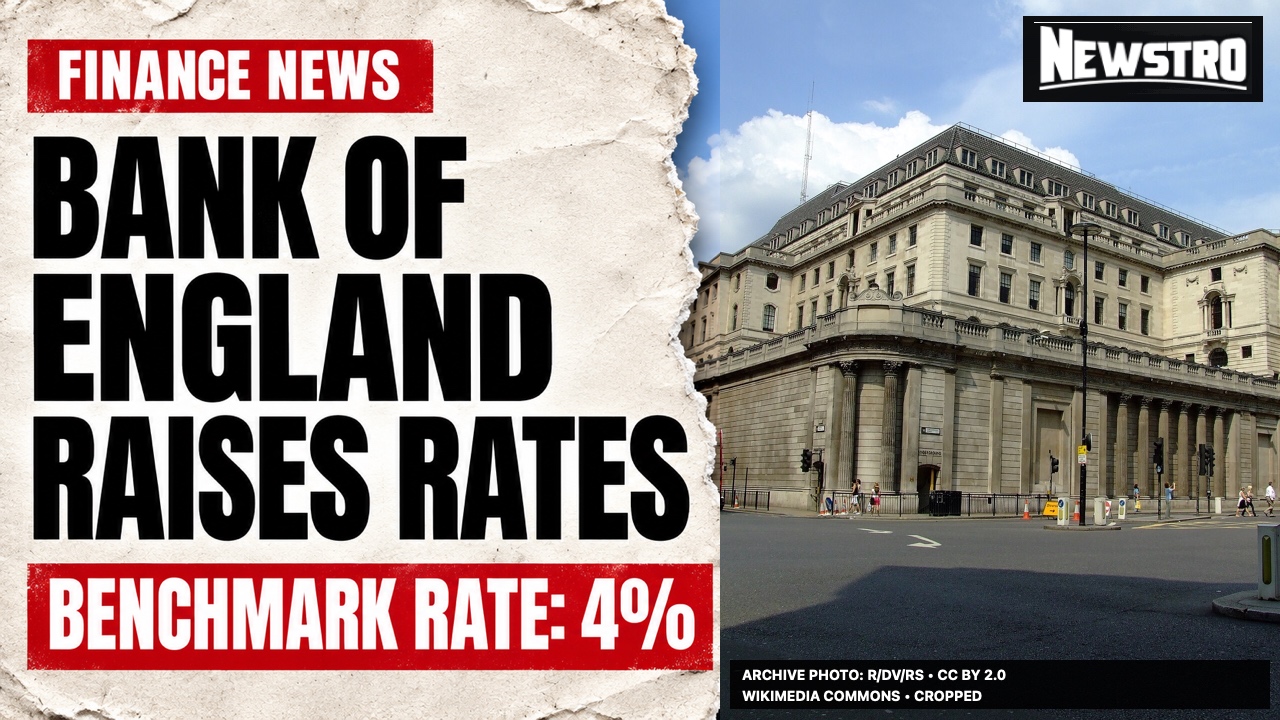
Hero: conceptual illustration; thumbnail: credited archive photo
Share this story

The first increase in more than three years

November 5, 2026 · 10:10 p.m. Central / November 6, 4:10 a.m. in London

The Bank of England has raised its benchmark interest rate to 4%, its first increase in more than three years, as energy costs push up inflation and put pressure on British households and businesses.

The Monetary Policy Committee lifted the rate from 3.75% by a quarter of a percentage point. Eight members supported that move; the ninth, Catherine Mann, wanted a larger increase to 4.25%, according to the bank’s decision and minutes. All nine therefore favored raising rates.

The Associated Press reported that the previous rate increase was in August 2023.

Why the bank acted

U.K. consumer price inflation reached 3.5% in September, above the central bank’s 2% target. The bank forecasts inflation will rise to around 5% by the middle of 2027 before falling as energy pressures ease and restrictive rates weigh on prices.

The bank said the conflict in the Middle East has driven higher energy costs. It warned that while evidence of broader effects on pay and other prices remains limited, the pressure building in the economy warranted a rate increase.

That projection is a forecast, not a guaranteed outcome. The bank’s minutes emphasize that the duration of the conflict, energy prices and the response of wages and businesses remain uncertain.

What the decision could mean

The Bank Rate influences what commercial banks charge and pay, but it does not automatically change every consumer’s rate. Borrowers with variable-rate products may see changes sooner than those locked into fixed-rate mortgages; savers’ returns can change too, depending on their provider and account.

Higher rates can restrain inflation by discouraging borrowing and spending, but they can also make credit more expensive and slow economic activity. The effect differs across households and businesses.

Governor Andrew Bailey cautioned that the move should not be treated as the start of an inevitable series of increases, AP reported. The committee said future decisions are not on a preset path. The next decision is due December 17.

Where the decision is made

The star marks the approximate Bank of England in London area for context.

★ Approximate Bank of England in London area. Map data: OpenStreetMap contributors, ODbL. Open map.

The path to the decision

Dates are local to the United Kingdom.

  1. The bank last raised its benchmark rate before the latest decision, AP reported.
  2. U.K. consumer price inflation reached 3.5%, according to the bank.
  3. The bank published its decision to increase Bank Rate from 3.75% to 4%.
  4. The next policy decision is scheduled.

The bank’s announcement

The Bank of England announced the decision on its official X account. Its minutes make clear that the dissenting member favored a larger increase.

Open the original post if the embed does not load.

Sources and visual credits

Bank of England decision and minutes · Associated Press · Reuters via Euronext.

Hero: conceptual illustration, not a photograph. Thumbnail: archive photograph by R/DV/RS via Wikimedia Commons, CC BY 2.0, cropped; 2008. Map: OpenStreetMap contributors, ODbL.