
Latest
Science & Space

Small Earthquakes Near The Geysers: What the California Reports Mean

USGS records show small quakes in a geothermal area where seismic activity is common. Reports call the cluster a swarm; they do not establish that a major quake is imminent.

Read the story
Science & Space · Read the story
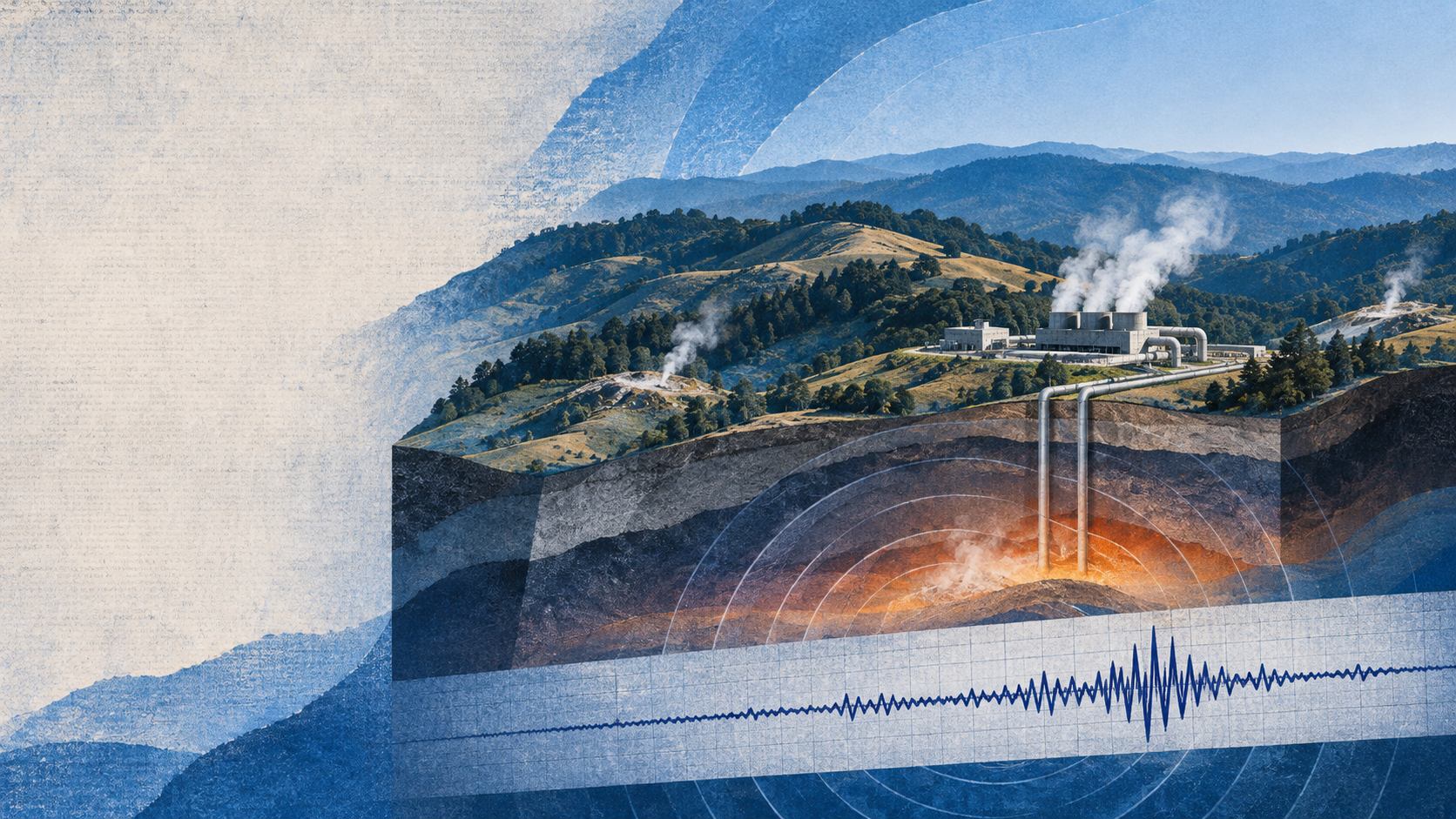
Conceptual illustration of a geothermal landscape and seismograph; not a photograph or actual seismic recording.
Generated conceptual illustration · not a photograph or actual seismic record
Share this story

What the instruments recorded

Updated November 2, 2026, 8:00 p.m. Central

A magnitude 2.7 earthquake struck northwest of The Geysers in Northern California on Monday morning, according to the U.S. Geological Survey. It was one of several small earthquakes recorded in a geothermal area where such activity is common.

The USGS located the quake about 4 miles northwest of The Geysers at 7:14 a.m. Pacific time, at a depth of about 1.7 miles. The agency also recorded a magnitude 1.1 earthquake nearby at 12:45 p.m. Preliminary earthquake information can be revised.

Insider Paper, citing the Daily Mail, described more than two dozen minor seismic events near The Geysers and called the activity a swarm. Newstro verified individual USGS event records but has not independently confirmed that count or found a USGS statement classifying this specific sequence as an unusual swarm.

Is it an earthquake swarm?

A swarm is a series of earthquakes concentrated in an area over time, often without one clearly dominant mainshock. USGS scientists explain that swarms can occur in geothermal or volcanic settings and on faults without a volcano involved.

The local records and reporting show several small quakes. Calling this particular sequence an unusual swarm requires more context than the two individual records above provide: the count depends on the area, time window and smallest magnitude included. Newstro has not confirmed those criteria behind the reported total.

Frequent small earthquakes are part of the area’s background. In its October 27 weekly update, the California Volcano Observatory described seismicity at The Geysers as typical for the earlier week of October 19–25, when it recorded 87 earthquakes greater than magnitude 1 there. That older weekly count is background, not a measurement of Monday’s activity.

What about the San Andreas Fault?

The San Andreas and Healdsburg–Rodgers Creek faults are major regional earthquake hazards, but they are miles from the geothermal field, according to the USGS. An earthquake near a major fault is not automatically an earthquake on that fault.

The agency says geothermal power operations can induce small quakes in The Geysers field and that changes in steam production and fluid injection have correlated with changes in local seismicity. That general explanation does not establish the cause of any particular Monday earthquake.

The activity is not evidence that a large earthquake is about to occur. The USGS says scientists cannot predict the precise time, location and magnitude of a major quake. Long-term earthquake probabilities describe risk across years, not a short-term countdown.

Where the magnitude 2.7 quake occurred

The star marks the approximate epicenter reported by the USGS northwest of The Geysers. It is not a map of the San Andreas Fault or the full area of shaking.

Epicenter: USGS. Map data: OpenStreetMap contributors, ODbL. Open map.

Recent readings in context

Monday times are Pacific standard time. Event locations and magnitudes are subject to review.

  1. The USGS observatory later described typical seismic activity at The Geysers during that earlier week. USGS weekly update
  2. A magnitude 2.7 earthquake was recorded northwest of The Geysers. USGS event page
  3. A magnitude 1.1 earthquake was recorded north-northwest of The Geysers. USGS event page

Practical preparation

Living in earthquake country means being prepared before shaking starts. Ready.gov recommends securing heavy objects, planning with your household and practicing “Drop, Cover, and Hold On.” Earthquake early warning detects shaking after a quake begins; it is not a prediction that tells people days in advance when one will happen.

The post that raised the question

Insider Paper’s post describes a Northern California swarm near a major fault. The USGS data and context above explain what is confirmed and what the headline alone cannot establish.

Open the original post on X if the embed does not load.

Sources and visual credits

USGS magnitude 2.7 event · USGS magnitude 1.1 event · USGS Geysers FAQ · USGS volcano updates · USGS earthquake prediction FAQ · Insider Paper · Insider Paper on X · Ready.gov.

Hero and thumbnail: generated conceptual illustration, not an actual photograph, seismic record or depiction of a specific facility.