
Latest
Election

Supreme Court Rejects Trump Administration’s California Ballot Request

The justices declined to order the state to set aside ballots linked to a federal list of voters whose citizenship the administration questions.

Read the story
Election · Read the story
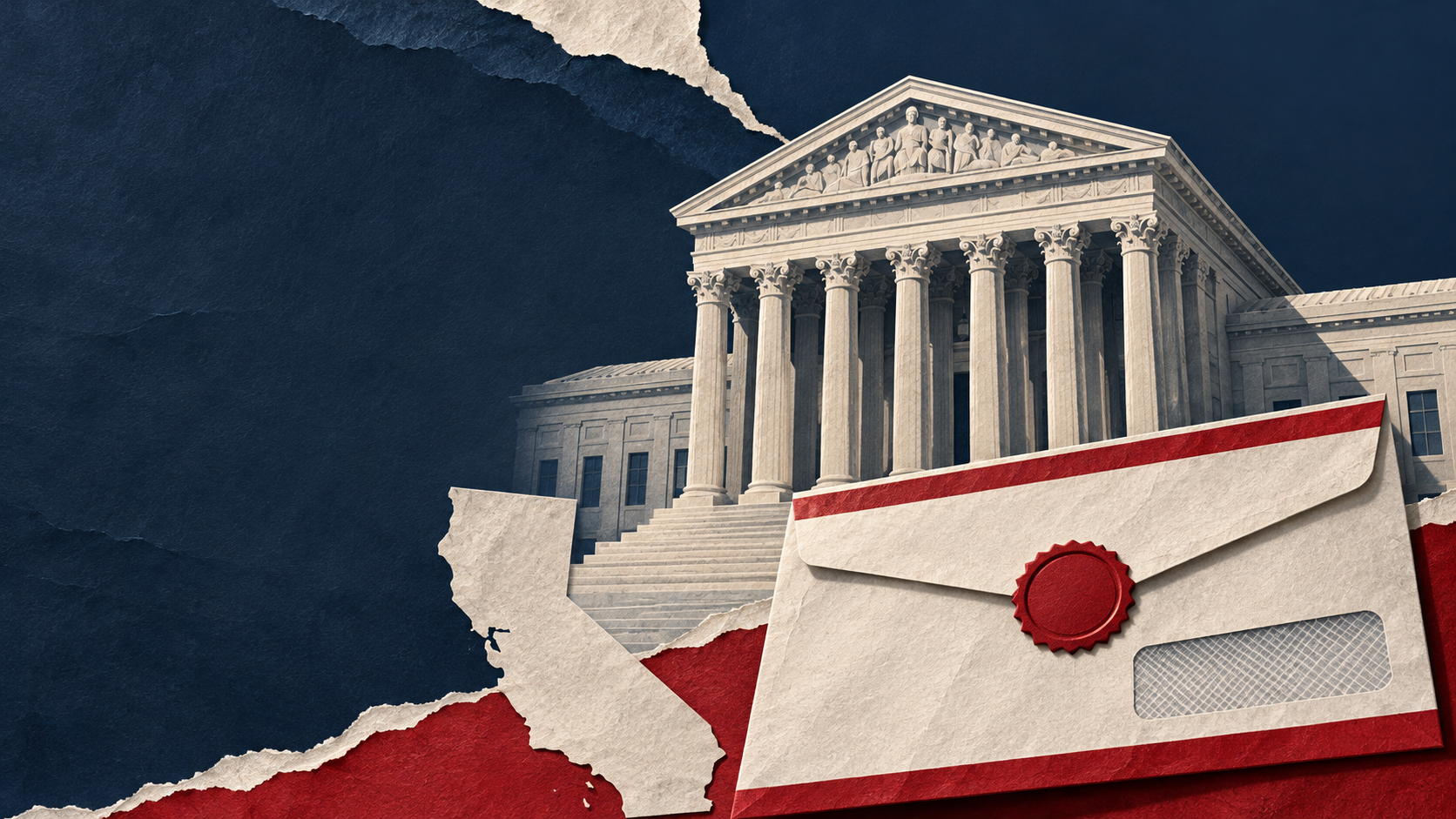
Conceptual illustration of a courthouse and a mail ballot, not a photograph of the case.
Generated conceptual editorial illustration · not an actual event photograph
Share this story

Emergency request rejected on election eve

Updated November 2, 2026, 5:50 p.m. Central

The U.S. Supreme Court on Monday rejected the Trump administration’s emergency request to make California set aside ballots associated with voters the federal government says may not be U.S. citizens.

The decision came on the eve of the final day of voting in the midterm elections. The court did not explain its reasoning, and no justice publicly dissented, The Associated Press reported.

The administration’s list contains about 20,000 names. That figure is a count of people identified by the government, not a confirmed count of illegal votes or even necessarily the number of ballots cast. State officials dispute the list’s reliability.

What the government asked for

The Justice Department sued California in October and asked that ballots associated with people on its list be separated until their citizenship could be verified. It said the list identified likely noncitizens registered to vote; federal law prohibits noncitizens from voting in federal elections. Justice Department announcement

The administration described the request as a way to protect election integrity while allowing eligible votes to be counted after verification. The state argued that the information was flawed and that the proposed action could prevent eligible voters’ ballots from being counted. AP · Axios

California officials told a court that a sample from the list included canceled or inactive registrations, CBS News reported. A federal lawyer acknowledged that the data had a high error rate, AP reported. Inclusion on the list does not establish that a person is a noncitizen or voted unlawfully.

What the courts decided

A federal district judge rejected the administration’s request, and a divided appeals court panel upheld that decision. The administration then asked the Supreme Court for an emergency order while the appeal proceeds. The justices denied the immediate request; that is not a final determination of every issue in the underlying litigation. AP · Axios

In an earlier phase of the dispute, the Ninth Circuit said the government had not given the district court enough opportunity to consider its request before seeking intervention. That earlier procedural ruling is separate from the later emergency denial by the Supreme Court.

What this means for voters

The court did not order California to separate the disputed ballots. The state said voting was already underway and that singling out ballots would be impractical after processing. California mails ballots to its registered voters, AP reported.

Voters seeking current information about their own registration or ballot should consult the California secretary of state’s elections page or their county election office. The dispute over the federal list should not be read as proof that every person named on it was ineligible.

Key dates in the dispute

  1. The Justice Department announces its lawsuit against California. DOJ
  2. The Ninth Circuit dismisses an early appeal on procedural grounds. Court opinion
  3. A divided appeals panel rejects the government’s later request for emergency relief. CBS News
  4. The Supreme Court rejects the administration’s emergency request. AP
  5. Election Day. California elections office

AP’s update on the ruling

The Associated Press reported the Supreme Court’s decision in this post. Its article, linked above, provides the details and context.

Open the original post on X if the embed does not load.

Sources and visual credits

Associated Press · Axios · U.S. Justice Department · Ninth Circuit opinion · Associated Press on X.

Hero and thumbnail: generated conceptual editorial illustration; not a photograph of the court or an actual ballot.