
Latest
Science & Space

Ancient Martian Meteorite Found in Sahara Offers Clues to Early Mars

Researchers dated Teghaza 001 to at least 4.1 billion years ago and found signs that water altered the rock.

Read the story
Science & Space · Read the story
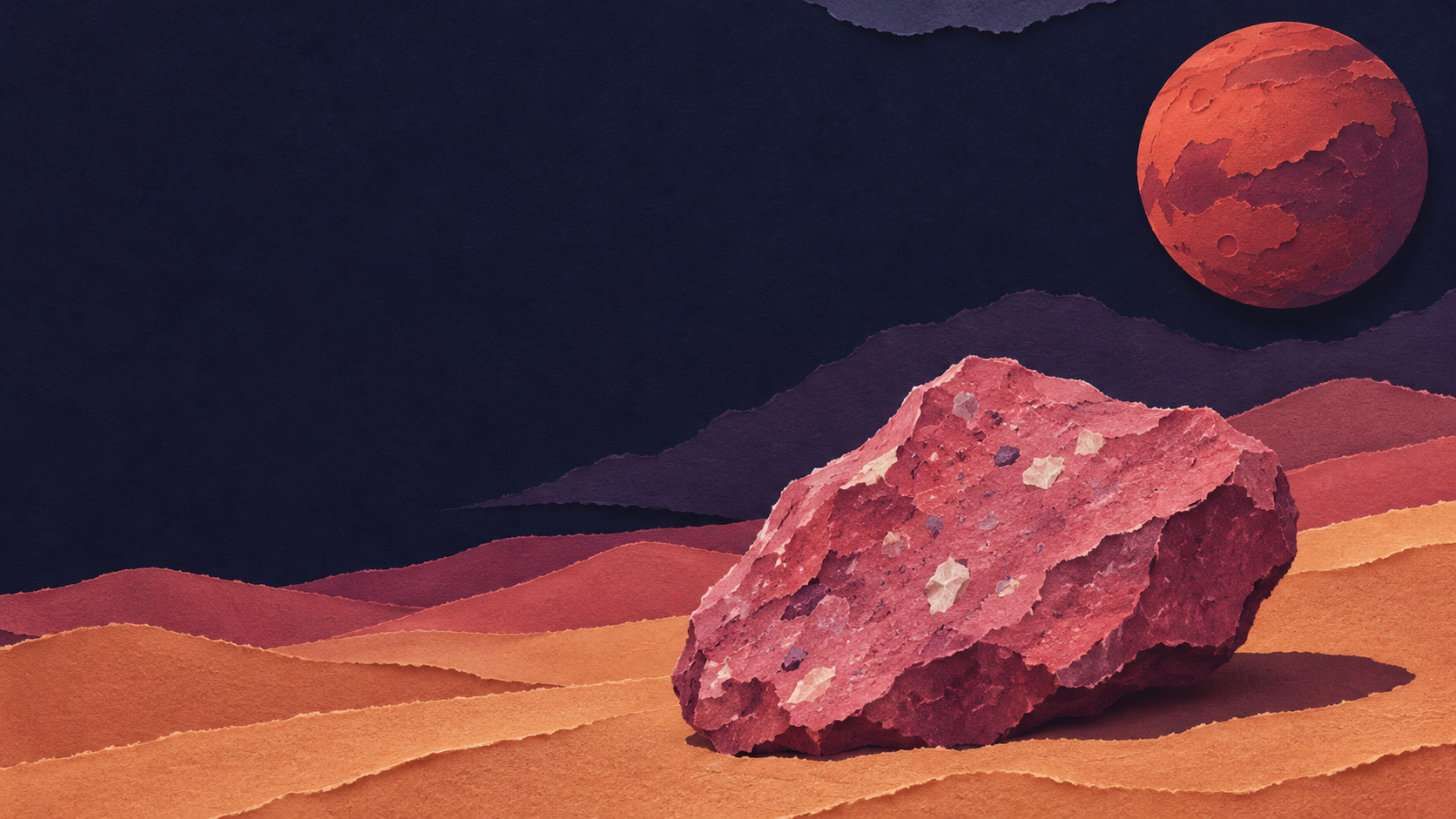
Conceptual paper-cut illustration of a rose-colored meteorite on desert sand beneath Mars, with a science headline; not a photograph.
Conceptual editorial illustration · not an actual scene
Share this story

The latest

November 11, 2026, 9:45 a.m. Central time.

A rose-colored meteorite found in the Sahara in 2022 has given scientists a rare sample of early Martian rock. A study published October 29 in Science dates Teghaza 001 to at least 4.1 billion years ago.

The meteorite was found near the Teghaza salt plain in Mali and is among the oldest Martian meteorites found on Earth, according to NASA’s Jet Propulsion Laboratory.

What the rock reveals

Researchers identified minerals that formed as molten material cooled and chemical evidence that the rock later interacted with water-bearing fluids. NASA says dating indicates water altered it around 4.1 billion years ago; the rock itself may be older.

A separate Science Advances study, published in June, examined the meteorite’s water content. Evidence of water-rock interaction does not by itself establish that life existed on Mars.

A fragment with an unknown origin

The rock was ejected from Mars by an impact and eventually reached Earth. Scientists compare the chemical and mineral signatures of meteorites with data from Martian missions to identify their origin, NASA says.

The exact location on Mars where Teghaza 001 formed is not known. Its unusual mix of minerals offers a sample for future study, but one rock cannot tell the whole history of the planet.

Timeline

2022: The meteorite was found in Mali. June 2026: A study examined its water content. October 29, 2026: Researchers published a study of its age and mineral makeup.

Where

The star marks the approximate Teghaza area in northern Mali, not an exact discovery site.

Map data: © OpenStreetMap contributors, ODbL.

Sources and visual credits

NASA Jet Propulsion Laboratory · Science study abstract via PubMed · Science Advances: water study · University of New Mexico

Hero and thumbnail: conceptual editorial illustration, not a photograph.